Sunday, August 26, 2012

Stolen Sunday Solace...


The misty grey sky, palpable humidity and indescribable scent of rain foretells there is scarcely enough time to gather flowers for a fresh bouquet on this Sunday morning before the impending shower arrives…

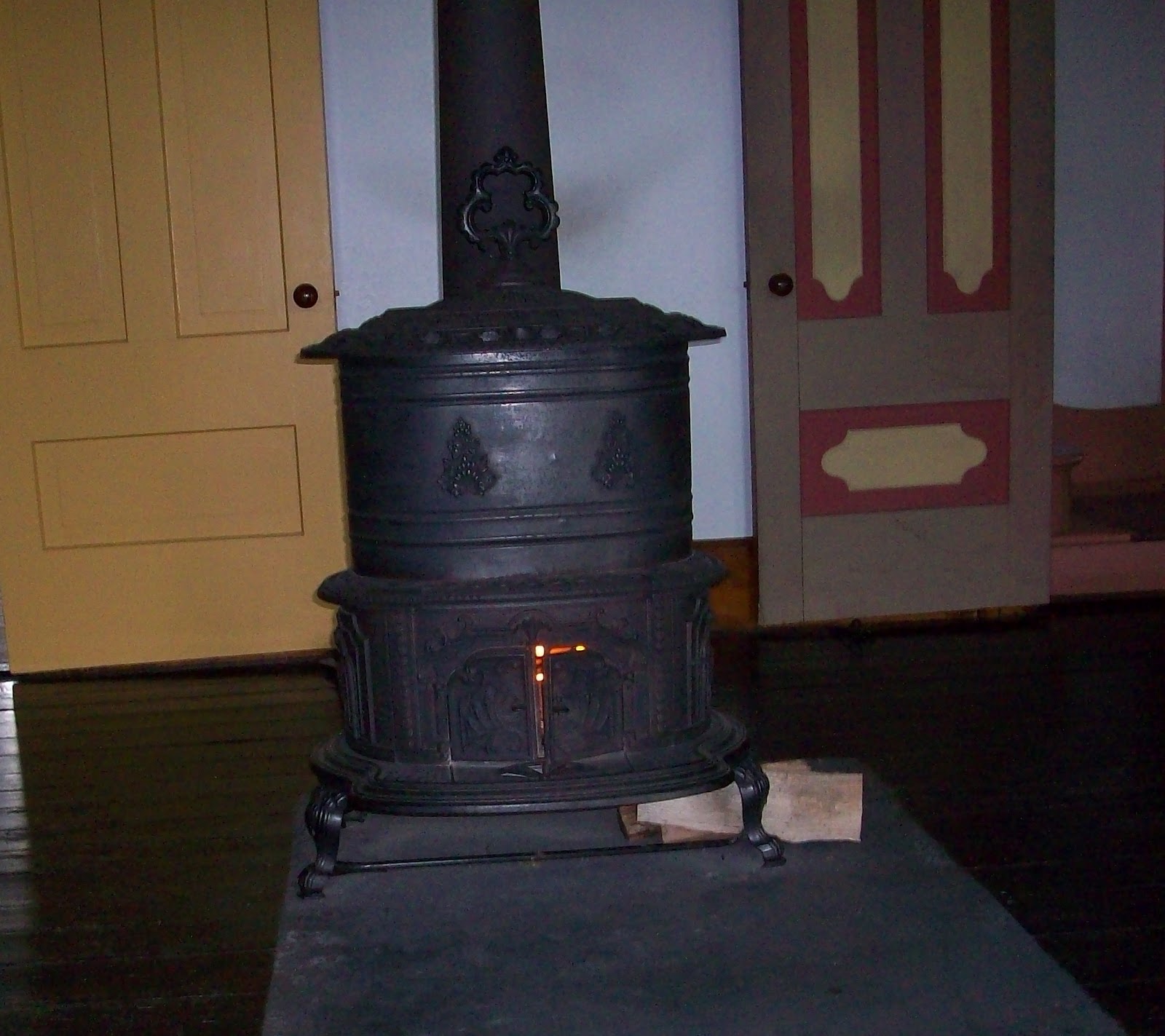
There is just enough time to gather a few colorful flowers, chamomile and a large bunch of mint. Once placed in a vase, there’s no need to breathe deeply. The heavy wet air instantly infuses the mint and chamomile scent into the dining room.  Back in the kitchen, there is a stash of maple logs and cedar kindling. They make the perfect fire in the dining room stove. The fire is small enough so as not to warm the room, but large enough to slightly dry the air in the room and infuse yet more fragrance into the air on this August afternoon. 

On a quiet Sunday afternoon, it is easy to steal a few simple moments of bliss. Sip a cup of coffee, quietly knit and enjoy a bit of 19th century aromatherapy.


 Photos take in the Sanford House at Old World Wisconsin

Tuesday, February 7, 2012

The Frivolities of Tatting... 3rd in a Series of 4

Whether you call it Tatting or it's French name, Frivolite, tatting saw it's popularity rise in the mid-19th century. Growing out of the family of lace known as knotting, it's technique would not be fully realized until approximately 1868.  One can see portraits of 18th century ladies holding their fashionable shuttles wound with thread. It is very easy to mistake their fancy and beautiful shuttles as tatting shuttles. These large shuttles are knotting shuttles rather than tatting shuttles which are much smaller. Wealthy ladies passed time and showed their fancy shuttles and graceful handwork by creating a series of individual knots on a thread. These strings of knots were then couched onto fabric. This type of knotting had it's limitations and would fall out favor and be replaced by other forms of knotted lace like netting and well, tatting.


"A lady knots while her companion reads"
This silhouette was painted 
by Mrs Delany ( 1700-1788) (1)


It is thought the earliest known book showing tatting was published anonymously in 1843 and was titled A Lady's Handbook of Millinery, Dressmaking and Tatting. Its patterns are limited and very rudimentary, barely resembling the tatting we know today. These simple patterns, however, do have the recognizable knots and picots of modern tatting. Modern tatting is also a series of knots but unlike earlier knotting techniques, these knots rely on one another and cannot separately stand alone.

Found in Godey's 1857
One of the the simple patterns described in the book, can be seen in the engravings on the left. These engravings were published in 1857 in Godey's Lady's Book and Magazine and a year later in Peterson's Magazine. It is a series of scallops made of partially closed rings. By the 1860's partially closed rings are uncommon, and now it is rare to see partially closed rings in today's tatting.

Seemingly, destined to languish in moderate obscurity with its limitations in design and technique, tatting would see an abrupt change as Mlle Eleanor Riego de la Branchardiere chose to embrace it.....


Contemporary tatting in its most basic form. Notice the rings (circles)
 and the picots (small loops at the tip of the rings). 
Lace c. early 19teens - 1930s from my collection


It is easy to see the chain in the 
above doily. They are the "arcs"
that connect the rings.
This is a pattern from the 1940s 
that I tatted several years ago.


By the time Mlle Riego, as she was known, wrote her first of 11 books on tatting, the 2 most common elements of tatting had been the achieved. The ring (a circle of linked knots) and the picot (the tiny loops around the ring. She would use these two elements to create enough designs to publish books until 1864. In 1864 she would take the craft to the next level nearly completing what we recognize as modern tatting with the creation of the chain. From this point forward, little has changed in tatting technique. 1868 would be her last book on tatting.

Top: Tatted lace in the style of late 1850s - 1860s
Middle: Gutta Percha tatting shuttle
Bottom: Tatted Lace in the style of the 1840s


Tatting became an easy craft for any of the publishers of  ladies' periodicals and books to market. Women could master these techniques fairly quickly and with very little expense. Although much money could be spent on fancy shuttles made of sterling silver or carved ivory, most ladies used very basic tools. By the mid-19th century a basic gutta percha shuttle could be purchased for a few cents. A ball of cotton tatting thread was also very inexpensive. Tatting became a brand new form of fancy work to be embraced by the modern Victorian woman desiring to keep with the latest styles.


It is easy to put a tatting project in a workbasket or a pocket ready to be picked up when a few moments of free time may be spared. It does not require the concentration or space that more complicated forms of lace making may require. Tatting's French name, Frivolite, does give a good indication that a lady may only produce decorative pieces as opposed to something utilitarian. It is however, important to note that tatting is the most durable form of lace. Look closely at the rings. Once a ring is pulled closed, it cannot be opened easily and will therefore never unravel. During the high Victorian era, it was more common to apply it to children's garments than to women's garments. It was an attractive decoration that in turn wore well on children's apparel.


In the photo above, there are two vintage pieces of tatting from my collection. Left: Tatting on a linen table runner (c. 1860s-1880s)
Right: Doily with lace edging (c.19teens-1930s)


1916 Tatting Pattern Book
Tatting, like crochet, would keenly hit its zenith between 1900 to about the mid-1920's. At this time, both forms of handwork would flourish in both household decor and in women's apparel. Never before nor since would the complexity of designs and availability of challenging, complicated patterns exist. Women of any background had the ability to produce an ample supply of lace, and indeed they did. Many of the pieces that exist from this time are exquisitely beautiful.  


Top: Vintage Doily c. 1930s-1940s
Bottom: Doily Pattern from 
1940s tatted by me.

Tatting would again see a renaissance in the 1940s and 1950s when color would be added to the mix. What was a craft that was almost exclusively produced with white or ecru thread reached another level of whimsy. Dozens of choices of colored tatting threads would become available often variegated with odd mixes of color. It was also at this time when very thin thread became more common than the heavier threads seen in the 19th century. The most familiar tatting to many of us is the tatting from this era. We have seen it on edges of table runners, pillowcases, women's collars and of course, the handkerchief that every lady had in her purse. 


Tatted Lace, Shuttle and Thread from c1940s - 1950s


Tatting has had a difficult time surviving since the 1970's. It sees peaks and valleys every few years, but has fallen into a more obscure place than its cousin, crochet.

Next up the Copycats.....

 (1) Pam Palmer, Tatting, (Buckinghampshire, UK: Shire Publishing Ltd., 2004).

 Elgiva Nicholls, Tatting Technique & History, (Mineola, NY: Dover Publications, 1984).

Mary E. Fitch, Tatting - Series No. 6, (Brookline, Mass: 1916)

Heidi Marsh (Compiled By), Knit, Net, Crochet and More of the Era of the Hoop, (Greenville, CA: Self-Published, 1993).

Kathleen Warnick, and Shirley Nilsson, Legacy of Lace, (New York: Crown Publishers, 1988).


Sunday, January 29, 2012

Crochet Bursts onto the Scene.... 2nd in a Series of 4

Detail of crochet lace done by me.
Although a modern pattern, it
does have 19th c. elements.
"Lace...It All Starts Somewhere" was a piece I posted in August 2011. Filet, Needle and Pillow/Bobbin Lace were presented as early and popular forms of lace making. These lace techniques would remain popular to varying degrees through the Edwardian era on into the 1920s, but their decline would begin much earlier. The decline of these popular laces is complex and can be found in the changing tastes, technology, talent, and introduction of new forms of lace-making that would become available.  To use a modern euphemism, the introduction of Crocheting and Tatting would  burst onto the scene in the 1840s and 1850s forever altering the art of lace making.

Reproduction lamp mat with beaded
crocheted lace edging I crocheted
fusing a couple different 1860s
Peterson's magazine patterns.
It is not uncommon to read texts describing crocheting and tatting as centuries old or even ancient techniques. In short, this is simply not the case. Indeed, these forms grew out of old, even ancient techniques, but the crocheting and tatting we recognize today have only existed for approximately 155-170 years.  It is difficult to pin down an exact year that modern crochet begins, but we can say it is fully realized by 1845 and not earlier than the 1820s. It appears its modern seeds are found in the 18th century techniques of tambour (or nun's work) and shepherd's knitting. Tambour is most frequently credited to France and Shepherd's Knitting to Scandinavia. Both areas have a rich history of needlework.

Lady's wool petticoat (c.1860s-1880s) 
done primarily with the Afghan
crochet stitch from my collection.
There is also Afghan or Tunisian Crochet a slightly different and less familiar technique. This technique ebbs and flows in popularity throughout the 19th and 20th centuries. Afghan crochet's beginnings are even less certain than traditional crocheting, but there is evidence that it may indeed have begun in or around Afghanistan or Northern Africa.


Much of crochet's appeal lies in the ease of technique, inexpense of materials and quickness of results. The main reason the technique to spread throughout Europe and North America quickly after its development lies in technology. At the same time the technique is perfected in the 1840s, so is the ability for middle class ladies to subscribe to monthly periodicals or magazines and have the purchasing power for readily available and inexpensive materials. Publications like Godey's Lady's Book and Peterson's Magazines, companies like DMC and JP Coats and creative, influential women like Therese de Dillmont and Mlle Eleanor Riego de la Branchardiere were eager to instruct, influence and sell to the growing middle class.


Detail of Irish crochet lace collar
c. 19teens from Old World
Wisconsin's collection
It would be remiss not to mention the Irish Potato Famine in the spread of the popularity of crochet. During this time of great tragedy for the Irish, Ireland would, too, play a roll in crochet's popularity. French Nuns taught crochet lace to some of the poorest Irish women and children. They hoped to create a cottage industry so these women could work and feed their families. In short, they were indeed successful. Imported Irish Lace would be popular throughout the the 2nd half of the 19th and early 20th centuries. Irish crocheted lace would also become a sub-culture of crochet all unto its own.

Piece of crocheted lace
c.19teens-1920s from my collection
The average Victorian lady in both America and England was eager to consume the latest styles and learn the newest techniques in handwork. Easy to learn and quick to master, crocheting would indeed burst onto the scene in the 19th century and become a beloved form of handwork.  Rather than villanize the myth that crochet is an ancient art. I would rather put forth the idea that in a relatively short period of time crochet has been so fully embraced that it has become one of the most recognizable forms of handwork in the modern world. So recognizable in fact, we cannot imagine a time when it did not exist.


Full view of the lace doily. This is one of my favorite pieces
that I have crocheted. It was done about 10 years ago.
The pattern was found in one of the late-1990s
monthly editions of Magic Crochet published
by Les Editions de Saxe S.A, Danbury, CT.


Up Next: Tatting....

Liz Paludan, Crochet History & Technique, (Loveland, CO: Interweave Press, 1995).

S.F.A Caulfield, and Blanche C Savard, The Dictionary of Needlework, (London: 1887).

Kathleen Warnick, and Shirley Nilsson, Legacy of Lace, (New York: Crown Publishers, 1988).
Heidi Marsh (Compiled By), Knit, Net, Crochet and More of the Era of the Hoop, (Greenville, CA: Self-Published, 1993).

Annie Louise Potter, A Living Mystery: The International Art & History of Crochet, (United States of America: AJ Publishing International, 1990).

Saturday, December 31, 2011

New Years Greeting....

This post is simple. On the same day I found Master Floyd Clark's greeting cards, I also found this New Year's Card.  It is printed by the Gibson Art Co., Cinn. O. It was never sent, but it would have only cost 1 Cent to send in the US, Possessions, Canada and Mexico. Had you have wanted to send it someplace foreign, it would have cost you 2 Cents.  I presume it is from the early 1900s, but I could be wrong as the history of Greeting Cards is not my strong point. I thought the sentiment was lovely. 


Loving New Year Greetings

May the castles you built in the air last year
become solid realities in the present one. 


May you build a kingdom of 
castles in 2012!

Saturday, December 24, 2011

Master Floyd Clark's Holiday Cards...100 yrs ago...

While I was out and about yesterday enjoying a day off, I found a few cards addressed to Master Floyd Clark. Apparently, he was living in Milwaukee. I found a card as early as 1908.  I'm not sure how old he was, but with the title "Master" clearly he was a child at this time. Two of cards have wonderfully fun inscriptions and are a tiny window into the Holidays 100 years ago. Please note: I have typed them as they are written...errors and all.

Postmarked from Deer Lodge, Mont. Dated Dec 19 1910

Inscribed on Back in Ink:

Dear Floyd,

How are you? We are all well We have a new brother four months old and his name is Clark. What do you want Santa to bring you?

From Ruth & (two other illegible names)


Postmarked from Deer Lodge, Mont. Dated Dec 31, 1911

Inscribed on Back in Pencil:

Deer Floyd,

I am a little rascal and take all my brothers & sisters toys. I wish I could see you all. 

With Love from Clark Stoddard

Well, apparently little Clark was doing very well at 16 mos. since someone had written to Floyd on Clark's behalf. 

I wish everyone a Very Merry Christmas!

--Anne


Friday, December 16, 2011

New Socks Revisited....

It was this past Monday that I actually wore the first pair of socks I ever made. I must admit to being childishly excited, too. I did indeed finish them, but as with a first attempt at any new thing, they are not perfect. Wearable? Yes, they are wearable. Would I give them as a gift to someone? No.

Let me first say that I did enjoy knitting them. In fact, I found it fun and extremely relaxing. I am grateful to Karl who helped me turn my first heel. He was very patient. It wasn't as difficult as I thought it would be, but I would have struggled without his help.

The socks really have 2 problems. First, they turned out about a size too big for my feet. My gauge was very close. I used the size 2 needles found in the pattern, but my feet are rather narrow. I honestly didn't consider my narrow feet. The solution: I washed them in hot water and threw them in a hot dryer. As Karl stated, "It is washable wool. It is not necessary dryable wool."  They shrunk just enough to be a better fit.


Kitchener Stitch found in 
Folk Socks by Nancy Bush
The second problem was in the finishing. The pattern called for the toes to be closed with the Kitchener Stitch. This stitch is essentially the process of seamlessly grafting two raw edges of knitting together. I haven't used the Kitchener Stitch in a few years and never did use it much. I did not do it very well. I found the directions confusing. I have since found a better set of directions in the book by Nancy Bush titled Folk Socks. I will try this stitch again on my second pair of socks.


Yes, I am knitting a second pair of modern socks. I have already turned a heel without any help. The sock pattern I have used is from a how-to book published by Coats & Clark.  The book had been reprinted from the 1940s through part of the 1960s. I am using size 1 needles, and so far, they look to be a better fit. I love the ease of the pattern and enjoy the process of knitting a sock. I find the repetitiveness to be relaxing after a long day. Knitting a pair of socks is a small thing, but it was a lesson certainly worth learning.

Nancy Bush, Folk Socks, (Loveland, CO: Interweave Press, 1994), 58.

Learn How Book, (USA: Coats & Clark, 1941).

Sunday, December 11, 2011

Oranges, Oranges, Oranges...

As the rind is broken, the smell of orange hits your nostrils. Your thumbnail accidentally punctures the fruit sending fruit juice squirting and the cold, fresh juice landing on your cheek.  You peel away more of rind; more fresh, citrus smell fills the air. All the the peel is removed. It is time to break into the fruit. Holding the newly peeled orange in both hands you press both thumbs in between two slices. The further you press your thumbs into the fruit the more cold juice hits your face. Now, two slices are separated, and it is easy to separate two slices on the opposite side of the orange. Only after you are satisfied the orange has been pulled apart into individual pieces but before you take a bite, you raise a slice to your nose and inhale. It is time to bite into the sweet, cool slice of the orange. Your mouth is filled with the sting of the citrus and sweetness of the natural sugars. ..... Now savor that flavor ....and savor that next slice ....and the slice after that.... When you reach the next slice, remember this might just be the last fresh orange you have until next Christmas......


....but we are far removed from the above scene. We seldom experience an orange in this way except if you maybe have the wonderful opportunity to enjoy an orange freshly picked from the tree. In modern America, it is such a simple thing.  An orange.


If we have a taste for an orange we simply go to the store and buy a bag.  Many of us start the day with a glass of orange juice. We find an orange in the toe of our Christmas stocking. It is very nice; it holds the shape of the toe, but really...we want the candy that is inside our stockings.  We, as contemporary Americans, even forget that oranges do have a season. Currently, it is mid-late December through the winter months. This is when we find the very best oranges...especially clementines. The tiny little oranges purchased often in 5 lb. boxes or bags.  The Victorians, however, never forget that oranges have a season. It is a short season. Oranges are a Christmas treasure.


If you are poor, your only Christmas present may be an orange. If you are middle, middle class, you may have many oranges. If you are wealthy, you may have many more oranges. BUT, there is a great equalizer here. Whether you have one orange or many oranges, once the season has past you may not have ANY more oranges until next Christmas and if you inhabit the northern half of the United States you will probably not have any more fresh fruit until May or June when the berries begin to show.

The scarcity of fresh fruit in the north during the winter months does not truly begin to change until the late 1890s, and that change is mainly found in the big cities (1). Oranges were arriving from places like Spain. By the 1870s-1880s, the middle, middle class American family often had enough oranges to have use them in a variety of ways. The juice of an orange could be mixed with pulverized sugar to make an orange icing for a cake. The rinds could be candied or ground into cakes or cookies. Whole oranges could be decorated with whole cloves just by pushing the cloves into the rind. These oranges could be stacked like a pyramid and their scent released into the room. In the right setting, these clove-oranges would dry and retain their scent for a while. If many oranges were to be had, the juice could be cooked down with sugar until it was a syrup concentrate and then stored in a bottle for future use.  Orange marmalade is also a good use for many oranges.  Mulled cider and wine always tastes better when oranges are added. These are just some of the ideas for oranges, but never forget that fresh orange in the toe of the Christmas stocking.


...and regardless of variety, all 19th century oranges have seeds. Navel oranges are a product of the 20th century.  Now, quick, go find an orange and enjoy it in a way that you may never have imagined.

Pyramid of Oranges &
Apples as Decoration

Layer Cake with Orange Icing

(1) Glenn Porter, and Harold C. Livesay, Merchants and Manufacturers; Studies in the Changing Structure of Nineteenth Century Marketing, (Baltimore: Johns Hopkins Press, 1971), 10.