Sunday, May 4, 2014

1993...Is It Really Over 20 Years?...


Yes, it is over 20 years ago that I started at Old World Wisconsin, the largest living history museum in the Midwest.  …and today I start another one.

It was spring of 1993. I had called Old World Wisconsin regarding openings for historic interpreters from the payphone outside of my apartment in France.  A couple weeks later and still jet-lagged from just returning from my stint at EuroDisney (now Disneyland Paris), I believe I was late…or nearly late to my interview as I could not find the hidden driveway before the railroad tracks.  After spending months in Paris and being the ripe old age of 24, I was certain there was not any way my interview for museum work could be down this winding driveway amid the forest edge and wild marshy growth…  I parked the car in front of this old cottage-like looking house. “This can’t be right”, I thought.  As I walked towards the door, I must have looked bewildered. A kind gentleman greeted me at the door and I started a down a path I could not have envisioned…

Oh…the things I have learned over 20 years…far too many to list all of them here. I will however share 20 of them with you…

20.   Do not be afraid to try something out of ordinary. You might be surprised that it is really a good fit.

19.   Being a lady is hard work. There are often many layers and one may never slouch.

18.   Wearing 19th century clothes REALLY is fun…even if it is muddy.

17.   Washing muddy 19th century clothing is not fun.

16.   Old houses WILL tell you stories, but you have to know how to listen to them.

15.   Wisconsin is a beautiful place… Don’t take for granted where you grew up. It IS a special place with an important story.

14.   When learning to cook on a wood burning cook stove, the first important lesson is learned when you burn something you are baking beyond recognition.

13.   Cleaning the pan after you have burned said food with 19th century style tools is the second important lesson learned.

12.   To truly understand national history, one needs to study local history.

11.   When working at a living history sight, ALWAYS expect the unexpected. You never know when you may find oxen in your garden.

10.   There is something very magical when you witness someone “seeing” history in a different light for the first time.  Suddenly, the past is not merely something one reads in a book…it is all around us to be experienced with all of our senses.

9.       Coffee made on a wood burning cook stove is one of the best things in the whole world.

8.       Some of the tastiest meals are prepared on a wood burning cook stove, and it does not take 20 years of practice to get the hang of it.

7.       Ladies, never believe that women did not influence history. Studying our roles in society, the tools we used, the clothing we wore, the food we prepared, the relationships we maintained, and the activities we chose as a pastimes help define human history. Without our story, only ½ the story can be told.

6.       Children can be engaged and entertained by history. Let them experience it.

5.       Working in Living History is a gift. The opportunity to teach and to learn is equal and incomparable.

4.       Material culture is not a novel subcomponent of history. It is essential to understanding the past. With that understanding, we are able to understand the present and ourselves.

3.       The modern world is a good place to be.  Ultimately, modern plumbing makes drinking coffee made on a cook stove much more pleasurable.

2.       When speaking with the public, always remember, you never know with whom you are speaking. Influential people come in all shapes in sizes. They may not always be celebrities, authors, politicians, professors, or someone dressed in fancy clothes…they may be person standing right next to you. Listen and observe. You may have the opportunity to see the world through different eyes.

1.       You will not become wealthy working in Living History. You will become rich beyond imagination with experience… In these 20 years, I have forged some of the most important and long lasting friendships and relationships in my life.  The museum and my experiences there have forever influenced and shaped my life.  ….for that, I am DEEPLY and FOREVER grateful.

Yes, as soon as I shook the hand of Marty Perkins, that kind gentleman who greeted me at the door, I knew I was at the right place. I knew I belonged at Old World Wisconsin; I did not necessarily know that I would still be saying that after 20 years.

Saturday, December 22, 2012

Popcorn Strings....

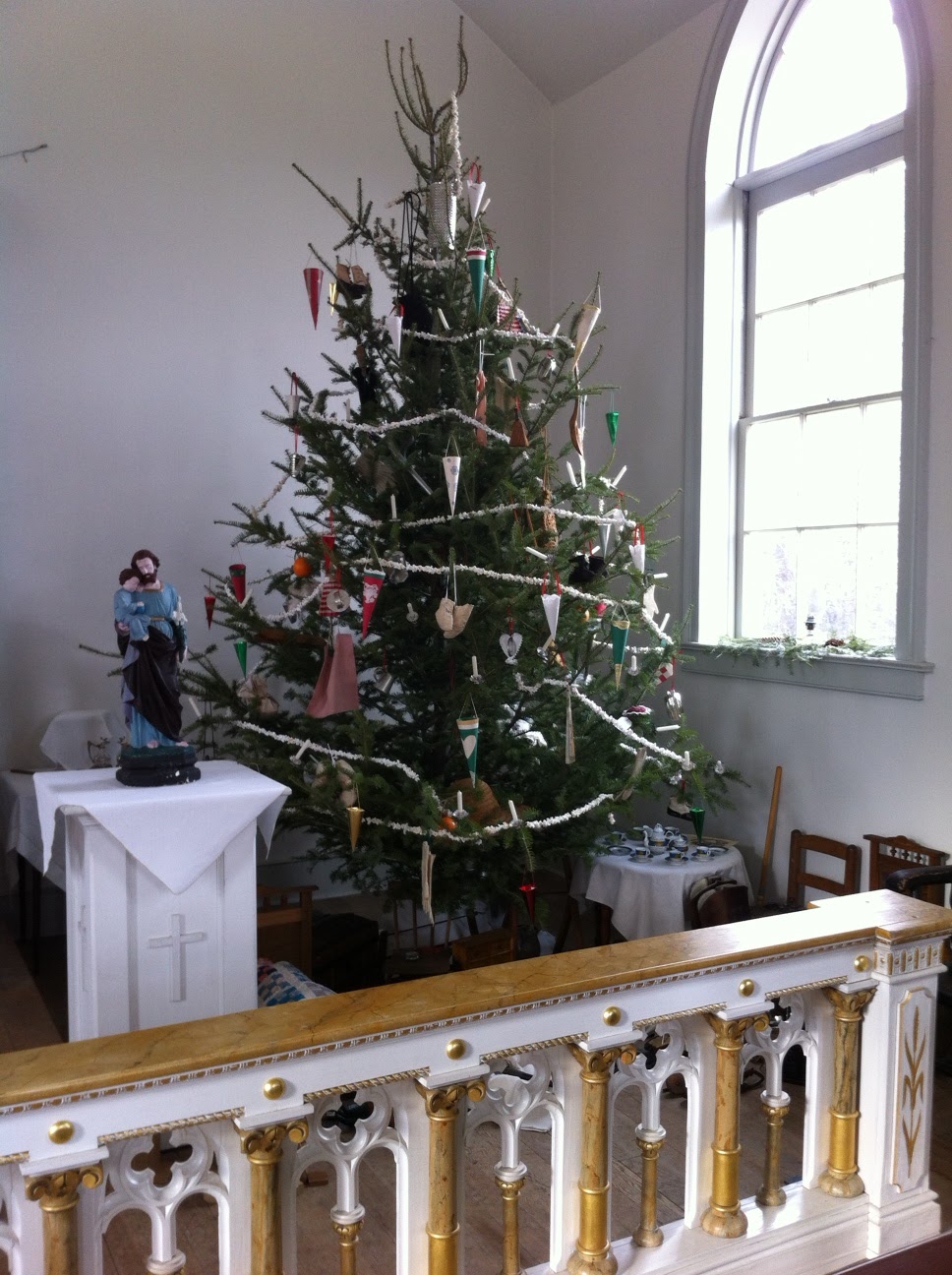
My most memorable encounter with a visitor this Christmas at Old World Wisconsin was in St. Peter's Church. The small church decorated in Victorian fashion was filled with visitors. Many gathered around the tree near the alter.

A woman moved through the crowd towards me. She was tall, slender, blonde, about my age in her early 40s and wearing a lovely knit wool cap.   Her eyes just sparkled with wonder. "Excuse me, may I ask you a question?" she asked in a beautiful accent. I smiled, "Yes, of course." She proceeded, "Did they really decorate the tree with popcorn? Is it really a tradition?" I followed with, "Yes, it was quite common among Americans." She smiled more brightly, "I am from Russia. We did not have popcorn until after the Soviet Union fell. It was a special treat."

My first thought was simply "Wow". Choosing my words carefully, I answered;  "Popcorn has been a common, inexpensive treat in North America for quite some time. A string of popcorn is a very inexpensive and an easy decoration that anyone can make. I imagine it was not allowed in the Soviet Union because it is very American."

"This is true", she smiled. "These are the things we discovered after... It is sooo beautiful. I cannot believe they had so much. I must do this at Christmas. Thank You."  With that, she quickly moved back through the crowd to gaze at the tree for a second time.

The exchange was so brief  and yet, so meaningful. I am not sure that I am able to capture the wonder and excitement that was present in her voice or on her face over a simple string of popcorn.

We do not always take the opportunity to see our world through someone else's eyes. In the moments that we do take the time, we are often reminded....One person's mundane is another's magic.

Merry Christmas

Sunday, December 16, 2012

Orange Cake...


Ladies, it has been some time since I last addressed you directly.  You have surely made note that Christmas is approaching quite quickly...


Soon, it will be time for your family’s Christmas dinner or the Christmas gathering your neighbor has graciously chosen to host.  I know many of you have been considering these challenges for some time and may still be searching for a new receipt.  You have wisely set aside a precious collection of favorite seasonal fruits tenderly preserved for this festive time of  year.  Dried currants, strawberries preserved in syrup and citron candied to perfection may indeed have been stored safely for this special occasion.

For those of you having made ample plans, a beautiful jelly will complete the Christmas table.  Sparkling in the evening light, guests will find it difficult to wait the serving of this special delight.  Sadly, you may be finding yourselves to be ill-prepared or hesitant to embark on this most grand gesture.  Fortunately, I have in my possession a simple receipt for a special cake that is both delicious and makes a lovely presentation on any table.  This receipt uses this season’s oranges and is simple enough for a child to make.  It is noteworthy to mention, with only a single adjustment this receipt can be used throughout the year.  When no longer in season, you may simply exchange the orange with another favorite seasonal fruit.

ORANGE CAKE

From: Nettie Horton Rodgers Diary (New Englander who moved to Fort Atkinson, WI in the 1860’s)

1-1/2 Cups Sugar                          
1 teaspoon Cream of Tartar
1 Cup Butter                                 
½ teaspoon Soda
1 Cup Milk                                    
3 Cups Flour
2 Eggs                                      
1 Orange
Pulverized Sugar
                                                      
Grate rind of 1 orange.  Squeeze juice of 1 orange. Grease and flour cake tin. Cream butter and sugar together.  Add eggs. Dissolve baking soda in. Add to above ingredients alternately with flour, cream of tartar, and orange rind. Bake in a medium oven.
To make the glaze, put the orange juice into a small bowl.  Stir in pulverized sugar, 1 Tbsp at a time, until a glaze consistency is reached. 

Orange Cake made as a layer cake
Now Gentlemen, this receipt does not exclude you from the limited competency you may possess in your wife’s kitchen.  Not only is it simple enough for any child to bake, you sirs, are also quite capable of success.  It may do well to note that her lack of preparation for a jelly may indeed be due to her desire to tend your comforts and needs.  Now having made this realization you may want to make a short trip to the neighboring store for an extra orange and don an apron for an afternoon.

_____________________
Modern Notes: This is an easy, fool, proof recipe that has long been used at Old World Wisconsin. 

For an easy glaze, replace pulverized sugar with modern powdered sugar. You may want to add about a 1/4 cup at a time. Depending on the size of the orange you may need quite a bit of powdered sugar to obtain the consistency you desire.

Medium oven = Approximately 350 Degrees Fahrenheit.  (I bake in a modern kitchen the same as I do using a wood-burning cook stove. Meaning, I "bake until done". The length of time needed to bake this cake varies slightly depending on the pan(s) used. I would set aside 30-40 min for bake time. Check with a toothpick. ...12/18/12 Tonight, I used both stoneware mini-loaf pans and c. 1940s glass bundt pan. Both took about 30 minutes to bake.

Saturday, November 24, 2012

Thank You, Marty...

This Thanksgiving Weekend seems an appropriate time for me to give thanks for having known and worked with a very special person, Martin C. Perkins, Curator of Research at Old World Wisconsin. Marty passed away unexpectedly on November 3, 2012. There are many people that weave in and out of our day-to-day experience leaving perhaps a thread in the fabric that is our life.  If we are lucky, we will encounter a few people who weave significant and lasting patterns in this same fabric.  For those of us who are fortunate enough to have known Marty Perkins, we have encountered such a person.  The woven pattern likely resembles that of timbers, fieldstone and cream city brick indicative of his passion for rural Wisconsin architecture.
I am not sure Marty would have ever considered himself in the roll of a weaver, so at best, this is an imperfect tribute.  He filled rolls of Historian, Restoration Worker, Researcher, Trusted Co-worker, Mentor, Student, Athlete, Boss, Optimist, and Teacher ….most importantly…Husband, Father and Friend.  Over the course of the past couple weeks, I have been unable to properly describe this multi-faceted man.  This post was started many times only to be deleted.  Nothing seemed appropriate, and I have been unable to finish it at loss for words and eyes clouded with tears.  While I was sitting at Old World on November 8th, the day of Marty’s funeral, I put pen to paper but was completely unable to write anything save for a few thoughts.  My thoughts drifted to the looms in the Schulz and Rankinen houses at Old World Wisconsin, the museum where he spent his entire career.  Marty’s impact on all of us is like the sturdy linen fabric and rag rugs often woven by rural immigrant farmers along with the complex  intricacies of the woven over-shot throws created by professional weavers.  He taught us all the importance of attention to detail, relevance, complex research and integrity.  This intricate pattern is held together with the strongest of thread that is spun from the fibers of gentleness, humor, patience, practicality and ever present kindness.
Marty, you taught so many of us that a simple log structure often opens a door to a story filled with ethnic importance,  social relevance and overwhelming beauty.  You taught us to listen to each structure as it tells its story and lets us touch the very people who built it.  When the structure’s voice became too faint to hear, you encouraged us to ask questions. Your answers always sent us back to the structure to hear more of its tales.  My love, as well as that of many others, for historic rural architecture was instilled by you.  You hired me in April of 1993 and started me down a path I could have never imagined.  As a new historic interpreter in 1993, I marveled at the sparkle in your eyes and pure passion in your voice as you spoke of the new exhibit at Old World Wisconsin, Thomas General Store.  Your voice while relaying the information regarding the acquisition, research and restoration of the field stone structure was like that of a boy receiving a new baseball glove for Christmas.  How could one not be inspired?  That was almost 20 years ago. This summer I saw that same sparkle when I worked one of our 1860s baseball games at the museum.  The game was won by the Eagle Diamonds, the team you so diligently coached.  In spite of the unusually intense summer heat, your enthusiasm did not wane.  Again, you were an inspiration.
I had the opportunity to sit down with you one Sunday morning in mid-September before any other interpreter arrived for the day.  We discussed the recent day trip Karl and I had taken through the U.P. up to Ontonagon.  We were looking for Finnish log structures, but unexpectedly encountered the intriguing Irish Hollow Cemetery.  You took the time to give me advice on our potential next steps if we were serious in furthering our interest in the cemetery and log structures we saw. Much of the advice was in the same vein as the training I received from you almost 20 years ago.  Unfortunately, next summer I will be unable to share with you our adventures when we return to some of these places.  Fortunately, these words of wisdom ring loudly in your voice.  
Our Director at Old World Wisconsin, Dan Freas, perhaps had the best words…and I paraphrase…“We all strive to leave a lasting legacy, and Marty has a left a legacy that will live on to inspire many at Old World Wisconsin”.  The great attendance at your funeral is a testament to the impact you had on many, many people from all walks of life.  Marty, your presence will be missed, but not forgotten, by Old World Wisconsin, the City of Mukwonago, the State of Wisconsin and the family you so greatly loved.  Personally, as I drive past old homes and commercial buildings with fascination, I will continue to think you each day as I have for almost twenty years.  
…and Marty, on a lighter note, Karl and I will continue to play one of our favorite games as we drive Wisconsin’s roads.  The game is simple.  When we encounter a small town, the question always is: Railroad Town, Mill Town or Crossroads Village? The quest for the answer often leads off our desired course and having missed a turn or two, but we always encounter a fascinating story…
Marty (Lower Right Corner) coaching
the Eagle Diamonds in July of 2009


For those of you interesting in further reading...
From the Milwaukee Journal Sentinel:
From Daycreek.com (a site dedicated to cordwood structures) reprinted an article written in 1990 for Wisconsin Architect in November/December 1990:

Sunday, August 26, 2012

Stolen Sunday Solace...


The misty grey sky, palpable humidity and indescribable scent of rain foretells there is scarcely enough time to gather flowers for a fresh bouquet on this Sunday morning before the impending shower arrives…

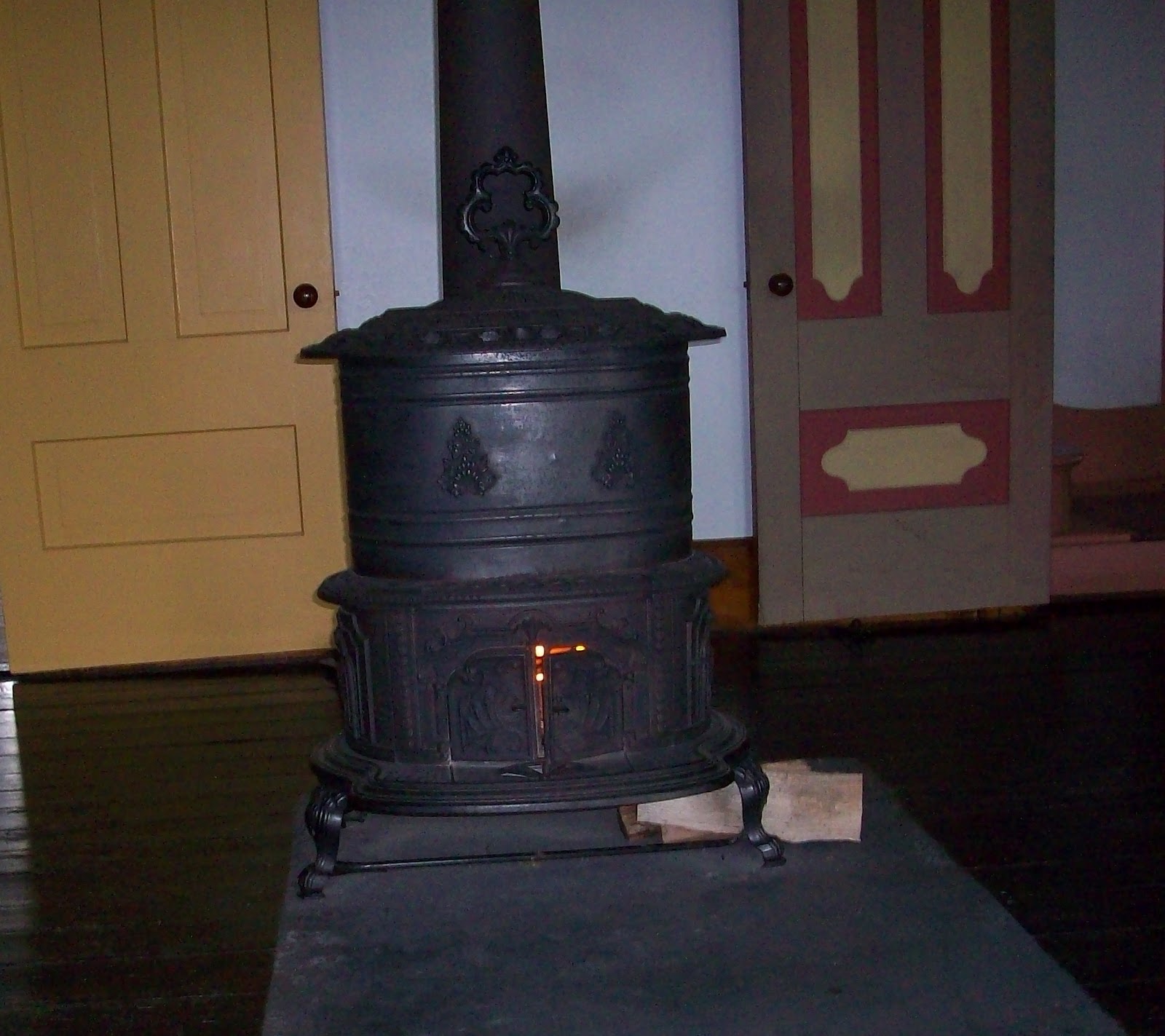
There is just enough time to gather a few colorful flowers, chamomile and a large bunch of mint. Once placed in a vase, there’s no need to breathe deeply. The heavy wet air instantly infuses the mint and chamomile scent into the dining room.  Back in the kitchen, there is a stash of maple logs and cedar kindling. They make the perfect fire in the dining room stove. The fire is small enough so as not to warm the room, but large enough to slightly dry the air in the room and infuse yet more fragrance into the air on this August afternoon. 

On a quiet Sunday afternoon, it is easy to steal a few simple moments of bliss. Sip a cup of coffee, quietly knit and enjoy a bit of 19th century aromatherapy.


 Photos take in the Sanford House at Old World Wisconsin

Tuesday, February 7, 2012

The Frivolities of Tatting... 3rd in a Series of 4

Whether you call it Tatting or it's French name, Frivolite, tatting saw it's popularity rise in the mid-19th century. Growing out of the family of lace known as knotting, it's technique would not be fully realized until approximately 1868.  One can see portraits of 18th century ladies holding their fashionable shuttles wound with thread. It is very easy to mistake their fancy and beautiful shuttles as tatting shuttles. These large shuttles are knotting shuttles rather than tatting shuttles which are much smaller. Wealthy ladies passed time and showed their fancy shuttles and graceful handwork by creating a series of individual knots on a thread. These strings of knots were then couched onto fabric. This type of knotting had it's limitations and would fall out favor and be replaced by other forms of knotted lace like netting and well, tatting.


"A lady knots while her companion reads"
This silhouette was painted 
by Mrs Delany ( 1700-1788) (1)


It is thought the earliest known book showing tatting was published anonymously in 1843 and was titled A Lady's Handbook of Millinery, Dressmaking and Tatting. Its patterns are limited and very rudimentary, barely resembling the tatting we know today. These simple patterns, however, do have the recognizable knots and picots of modern tatting. Modern tatting is also a series of knots but unlike earlier knotting techniques, these knots rely on one another and cannot separately stand alone.

Found in Godey's 1857
One of the the simple patterns described in the book, can be seen in the engravings on the left. These engravings were published in 1857 in Godey's Lady's Book and Magazine and a year later in Peterson's Magazine. It is a series of scallops made of partially closed rings. By the 1860's partially closed rings are uncommon, and now it is rare to see partially closed rings in today's tatting.

Seemingly, destined to languish in moderate obscurity with its limitations in design and technique, tatting would see an abrupt change as Mlle Eleanor Riego de la Branchardiere chose to embrace it.....


Contemporary tatting in its most basic form. Notice the rings (circles)
 and the picots (small loops at the tip of the rings). 
Lace c. early 19teens - 1930s from my collection


It is easy to see the chain in the 
above doily. They are the "arcs"
that connect the rings.
This is a pattern from the 1940s 
that I tatted several years ago.


By the time Mlle Riego, as she was known, wrote her first of 11 books on tatting, the 2 most common elements of tatting had been the achieved. The ring (a circle of linked knots) and the picot (the tiny loops around the ring. She would use these two elements to create enough designs to publish books until 1864. In 1864 she would take the craft to the next level nearly completing what we recognize as modern tatting with the creation of the chain. From this point forward, little has changed in tatting technique. 1868 would be her last book on tatting.

Top: Tatted lace in the style of late 1850s - 1860s
Middle: Gutta Percha tatting shuttle
Bottom: Tatted Lace in the style of the 1840s


Tatting became an easy craft for any of the publishers of  ladies' periodicals and books to market. Women could master these techniques fairly quickly and with very little expense. Although much money could be spent on fancy shuttles made of sterling silver or carved ivory, most ladies used very basic tools. By the mid-19th century a basic gutta percha shuttle could be purchased for a few cents. A ball of cotton tatting thread was also very inexpensive. Tatting became a brand new form of fancy work to be embraced by the modern Victorian woman desiring to keep with the latest styles.


It is easy to put a tatting project in a workbasket or a pocket ready to be picked up when a few moments of free time may be spared. It does not require the concentration or space that more complicated forms of lace making may require. Tatting's French name, Frivolite, does give a good indication that a lady may only produce decorative pieces as opposed to something utilitarian. It is however, important to note that tatting is the most durable form of lace. Look closely at the rings. Once a ring is pulled closed, it cannot be opened easily and will therefore never unravel. During the high Victorian era, it was more common to apply it to children's garments than to women's garments. It was an attractive decoration that in turn wore well on children's apparel.


In the photo above, there are two vintage pieces of tatting from my collection. Left: Tatting on a linen table runner (c. 1860s-1880s)
Right: Doily with lace edging (c.19teens-1930s)


1916 Tatting Pattern Book
Tatting, like crochet, would keenly hit its zenith between 1900 to about the mid-1920's. At this time, both forms of handwork would flourish in both household decor and in women's apparel. Never before nor since would the complexity of designs and availability of challenging, complicated patterns exist. Women of any background had the ability to produce an ample supply of lace, and indeed they did. Many of the pieces that exist from this time are exquisitely beautiful.  


Top: Vintage Doily c. 1930s-1940s
Bottom: Doily Pattern from 
1940s tatted by me.

Tatting would again see a renaissance in the 1940s and 1950s when color would be added to the mix. What was a craft that was almost exclusively produced with white or ecru thread reached another level of whimsy. Dozens of choices of colored tatting threads would become available often variegated with odd mixes of color. It was also at this time when very thin thread became more common than the heavier threads seen in the 19th century. The most familiar tatting to many of us is the tatting from this era. We have seen it on edges of table runners, pillowcases, women's collars and of course, the handkerchief that every lady had in her purse. 


Tatted Lace, Shuttle and Thread from c1940s - 1950s


Tatting has had a difficult time surviving since the 1970's. It sees peaks and valleys every few years, but has fallen into a more obscure place than its cousin, crochet.

Next up the Copycats.....

 (1) Pam Palmer, Tatting, (Buckinghampshire, UK: Shire Publishing Ltd., 2004).

 Elgiva Nicholls, Tatting Technique & History, (Mineola, NY: Dover Publications, 1984).

Mary E. Fitch, Tatting - Series No. 6, (Brookline, Mass: 1916)

Heidi Marsh (Compiled By), Knit, Net, Crochet and More of the Era of the Hoop, (Greenville, CA: Self-Published, 1993).

Kathleen Warnick, and Shirley Nilsson, Legacy of Lace, (New York: Crown Publishers, 1988).